Farming has always been about making smart decisions. But with new technologies and tools available, it’s easier than ever to use data to guide those decisions, increase productivity, and reduce waste. If you’re wondering how to make the most of the technology available to you, here are some key lessons learned from years of experience in the field.
- Take a Step Back and Assess the Big Picture
 In the world of firefighting, the best chiefs take a moment to step back and assess a scene from a high-level view before jumping into action. This approach is just as crucial in farming. Whether you’re planning for the season, making decisions on fertilizer applications, or tracking yield, it’s essential to take a step back and evaluate all the data before diving into solutions.
Farming is a complex operation, and the decisions you make early on can affect the entire season. By considering all variables—weather, field conditions, crop type, and past performance—you can better understand what’s happening and make more informed decisions.
- Benchmarking and Peer Learning: How Do You Stack Up?
Benchmarking is a powerful tool for improvement. Whether you’re assessing nitrogen efficiency, yield by previous crop, or field variability, comparing your farm’s data with regional or industry averages helps identify areas where you can do better.
For example, nitrogen use efficiency (how many pounds of nitrogen you need to grow a bushel of crop) is an excellent metric to track. By comparing your farm’s efficiency with others, you can see where you’re succeeding and where there’s room for improvement.
Beyond that, peer groups and farm networks allow farmers to learn from each other. By joining a community of farmers who share insights and practices, you can uncover new trends, troubleshoot challenges, and push the envelope on best practices. Peer groups hold you accountable and offer fresh perspectives that you might not have considered.
- Conduct On-Farm Research: Trial and Error to Find What Works Best
 One of the most powerful ways to refine your farming practices is by conducting your own on-farm research. Today, many farmers have access to tools like yield mapping, grain cart scales, and satellite imagery, all of which make it easier to run small trials and collect meaningful data.
On-farm trials allow you to test new strategies—like fertilizer application rates, seeding depths, or crop rotations—and see the direct impact of these changes on your yields.
Research trials don’t need to be complicated. Start small and measure the results. You’ll quickly see whether your ideas work or need tweaking. The data you collect can help you understand the true impact of each decision and guide you towards more efficient practices in the future.
- Addressing Field Variability: Understanding the Root Causes
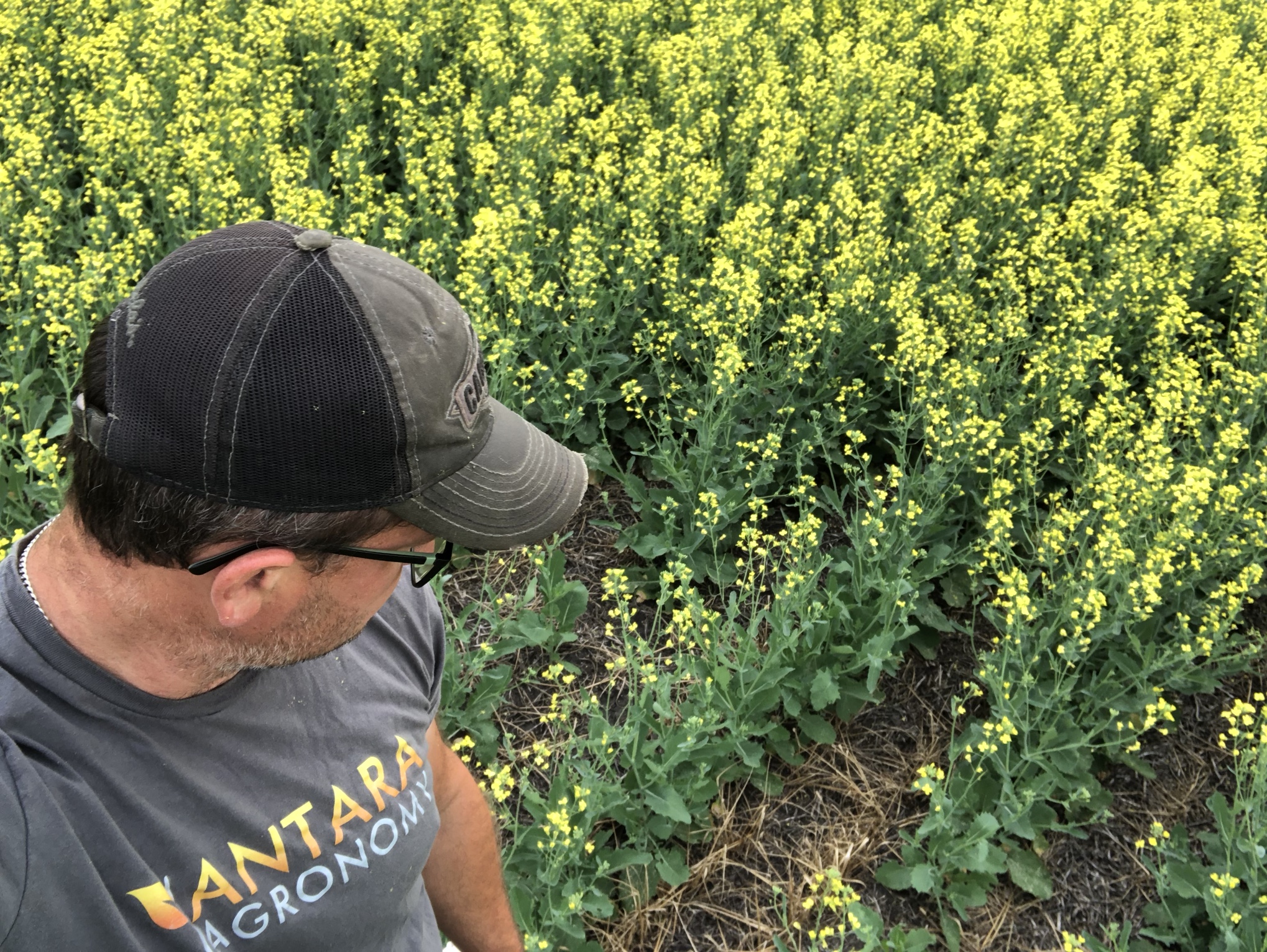
Field variability is a common challenge for farmers. It’s not always easy to understand why some parts of a field underperform while others yield better. Often, the causes can be linked to factors like poor drainage, salinity, pH imbalances, or even field history (such as old fence lines or previous crops).
Using tools like NDVI imagery (which measures plant health) and historical data (such as old aerial photos) helps uncover these hidden issues. For example, you might find that areas of your field perform poorly because they were part of an old pasture or suffered from erosion.
By identifying these issues and understanding their origins, you can make targeted interventions to improve those areas, such as adjusting the pH or improving drainage. Technology can help pinpoint these issues, but it’s the boots-on-the-ground knowledge and experience that help you fix them.
- Small-Scale Testing: Fail Fast, Learn Fast
Trying something new on a large scale without testing it first is risky. That’s why it’s crucial to start small. Conducting small, controlled trials gives you the opportunity to test new practices without committing too many resources upfront. This way, if something doesn’t work, you’re not facing a major loss.
The concept of failing fast is all about learning quickly from mistakes. Failures are part of the learning process, and they allow you to refine your approach for the next season. The key is to collect enough data to understand what went wrong and what can be improved.
- Putting It All Together: The Roadmap to Better Farming
By combining data analysis, benchmarking, peer learning, on-farm trials, and targeted improvements based on field variability, you can create a more efficient and productive farming operation. Understanding your farm’s numbers—whether it’s nitrogen use, crop yields, or variability—gives you the clarity to make smarter decisions.
Remember, farming is a journey of continuous improvement. By applying the data and insights you gather throughout the season, you can improve not only your yield but also your bottom line.

Confidence in Your Decisions
Farming doesn’t have to be a guessing game. With the right data and tools, you can be confident in your decisions and improve the way you manage your farm. By continuously gathering data, benchmarking against others, conducting trials, and learning from both successes and failures, you can make better decisions year after year.
Ultimately, the goal is to make farming more enjoyable, more productive, and more sustainable. So, take a step back, dive into the data, and start refining your practices today!