How many of you are actively tracking your nutrient removal rates over time?
By this, we mean measuring how much fertilizer you apply versus how much your crops actually take up. If you’re not monitoring this, you could be unknowingly depleting your soil and setting yourself up for long-term production challenges.
A Real-World Example:
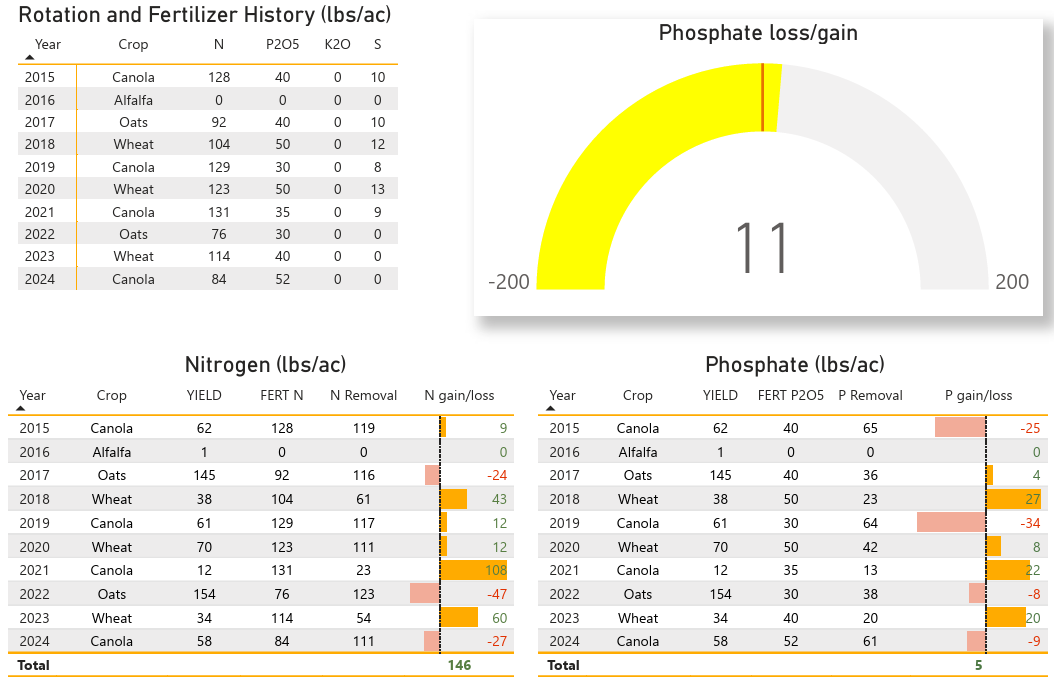
We sat down with a producer to review his Insights Benchmarking Report—a detailed analysis of his farm’s performance. As we examined the data, we noticed two specific fields consistently outperformed expectations. Year after year, these fields produced higher yields than what we had budgeted for in our fertilizer program.
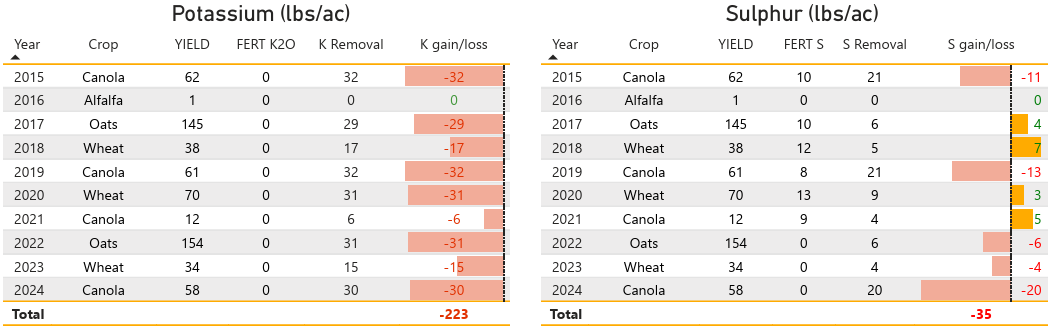
When creating a fertility plan, we typically base our estimates on average or above-average yields to ensure optimal nutrient supply. However, these two fields consistently exceeded those expectations. Over the course of 10 years, we identified a phosphate deficit of more than 180 pounds—a concerning gap that could impact future productivity.
Why This Matters!
If your high-performing fields are consistently removing more nutrients than you’re replacing, you risk nutrient depletion. Over time, this can lead to a sharp decline in yields, undermining all the effort and investment you put into your crops. The last thing any grower wants is to see once-thriving fields suddenly underperform due to nutrient mining.
Are You Tracking Your Nutrient Removal?
If you’re not comparing your fertilizer inputs with actual crop uptake, you could be facing a similar hidden deficit. Over time, this can lead to serious soil fertility issues that won’t be easy to correct. We strongly encourage every producer to monitor nutrient removal rates to ensure long-term soil health and consistent yields.
If you need guidance on how to get started, check out our
YouTube videos on our Insights Program, visit our website, or follow us on social media for more tips.
Got questions? Reach out—we’d love to help you maximize your farm’s potential.
Check out our previous blog posts here.